
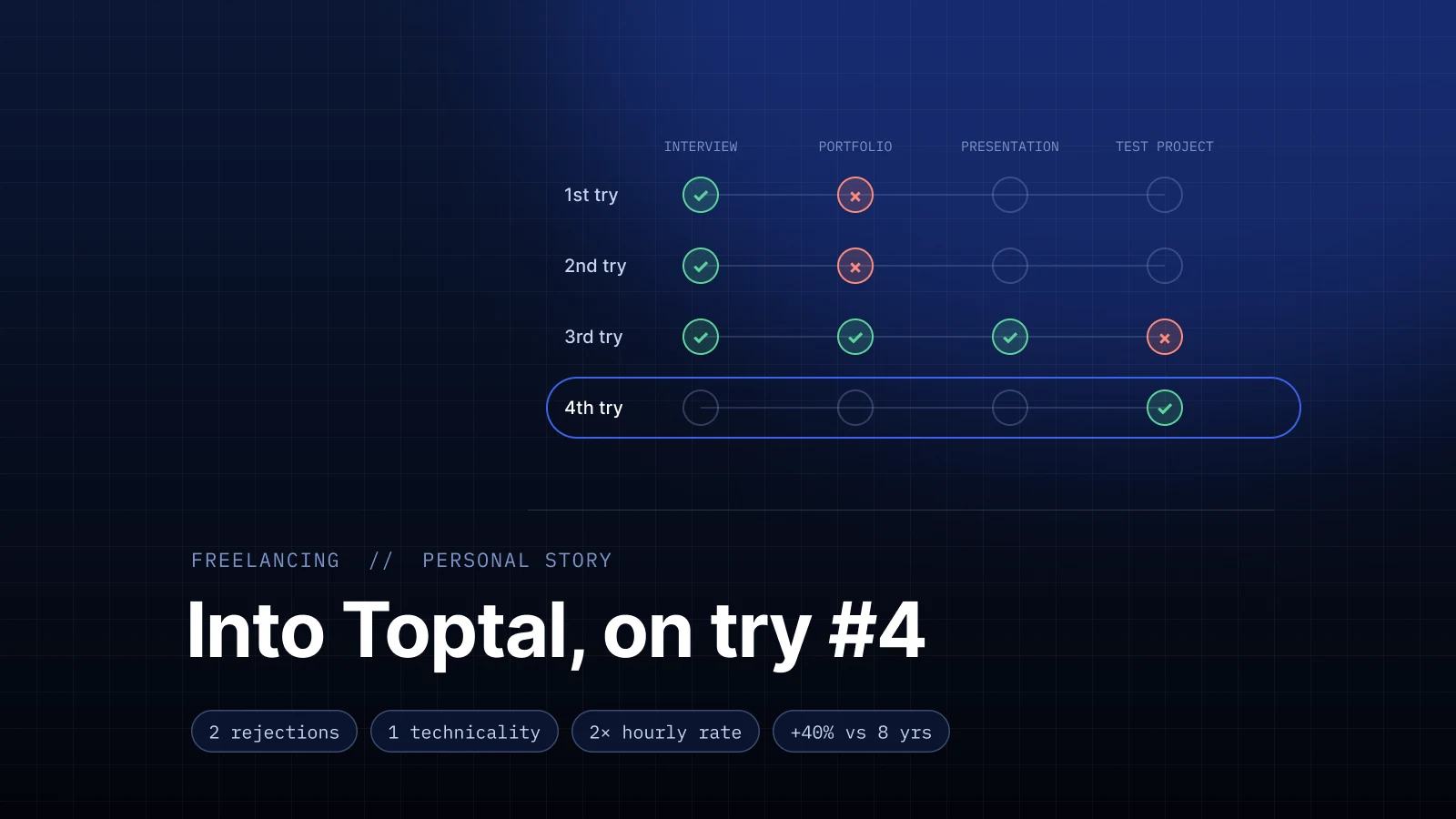
Toptal says it accepts the top 3% of freelancers who apply. For a long time, I was firmly in the other 97%.
I first applied back in 2016, tried again a while later, and was rejected both times. Today most of my work comes through Toptal, and it has changed how I work and what I earn.
This is the honest version of how that happened, including the parts that didn’t go well.
How Toptal’s screening works
For designers, the screening had four steps when I went through it:
- General interview and cultural fit. A conversation about you, your experience, how you communicate and how you work with clients.
- Portfolio review. Not just how your work looks, but how you think and make decisions.
- Presentation. You walk a panel through your work and explain your process.
- Test project. A real design task, done within a set time.
Fail any step and you’re out. You can apply again later, but you start over.
Attempts one and two: not ready, and they could tell
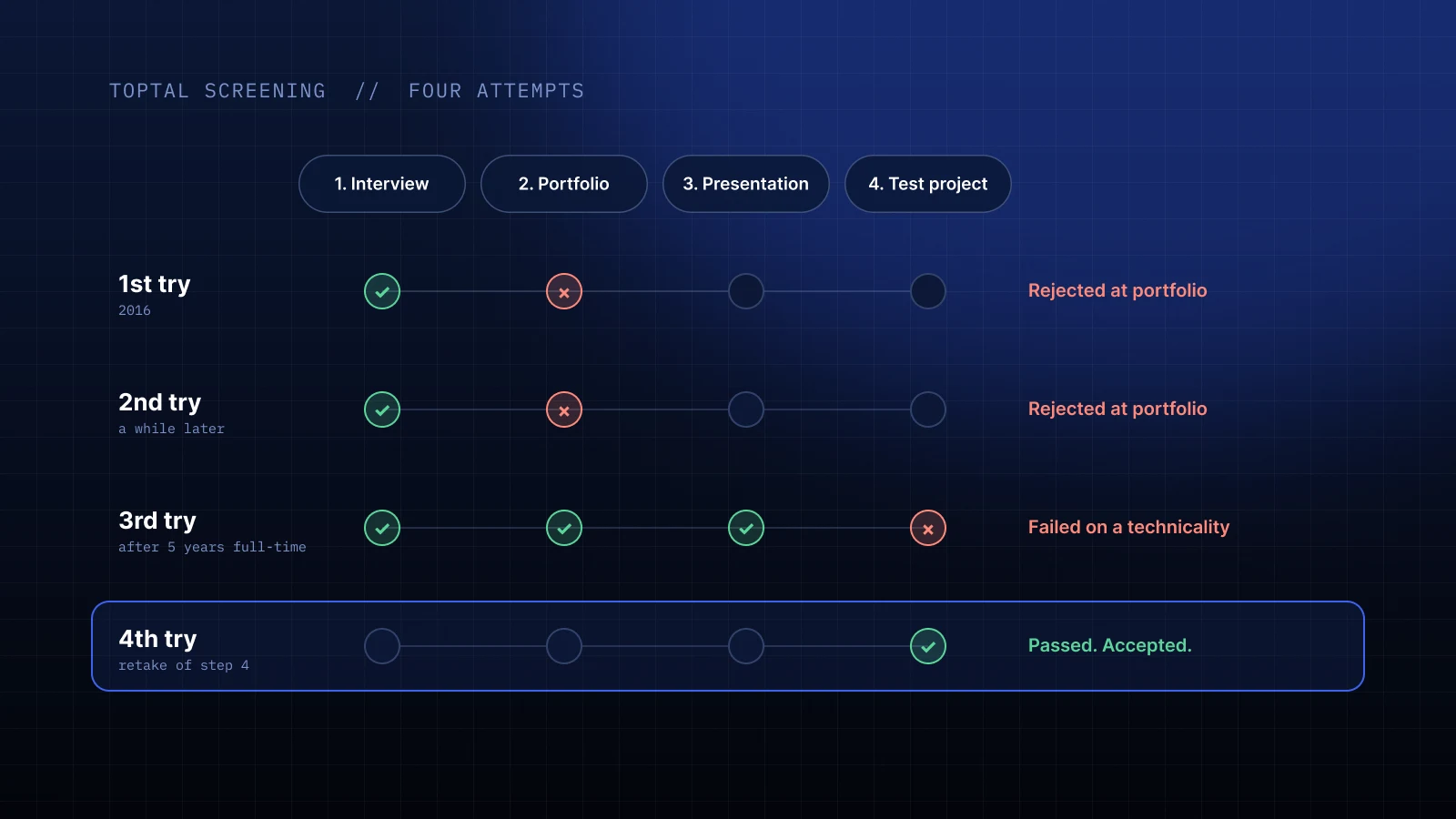
The first time, in 2016, I applied as a UX/UI designer. The general interview went fine, and then I was rejected at the portfolio review. A while later I tried again, with the same result.
Looking back, they were right. I was a good designer, but not yet the kind of UX/UI designer Toptal looks for. My portfolio showed nice screens, not a clear process: research, decisions, testing, and the reasons behind them.
Rejection stings, especially twice. But it also told me exactly where the gap was.
Five years of doing the work
After that, I took a full-time job with a company and stayed for almost five years.
I didn’t think of it as preparation for Toptal at the time. It was just work: real products, real deadlines, real people asking “why did you design it this way?” But that’s where most of my growth happened. Working on the same products for years teaches you things short freelance projects never do, like living with your decisions and fixing them when they don’t work.
When I eventually quit, I wanted to go back to freelancing on my own terms. And Toptal was still unfinished business.
Attempt three: so close it hurt
This time I passed the general interview again, and then the portfolio review, the step that had stopped me twice before. Then I passed the presentation.
The last step was the test project: a full UX/UI process for an app.
I failed it. Not because the design was bad, but because of a technicality. One requirement didn’t match what they expected, and that was enough.
I won’t pretend that was easy to take. Three out of four steps, and I was out again.
Attempt four: one more test project
So I applied a fourth time, this time to redo the final step.
I treated the new test project like a client project with a very picky client. I read the brief more than once, checked every requirement before I started, and checked them again before I submitted. I made the process visible, not just the final screens.
This time I passed.
What changed after I got in
I joined Toptal at a bad moment. The market was in a downturn, budgets were tight, and plenty of freelancers were struggling to find work. Getting in didn’t magically fill my calendar.
Still, I landed projects, and the difference was clear:
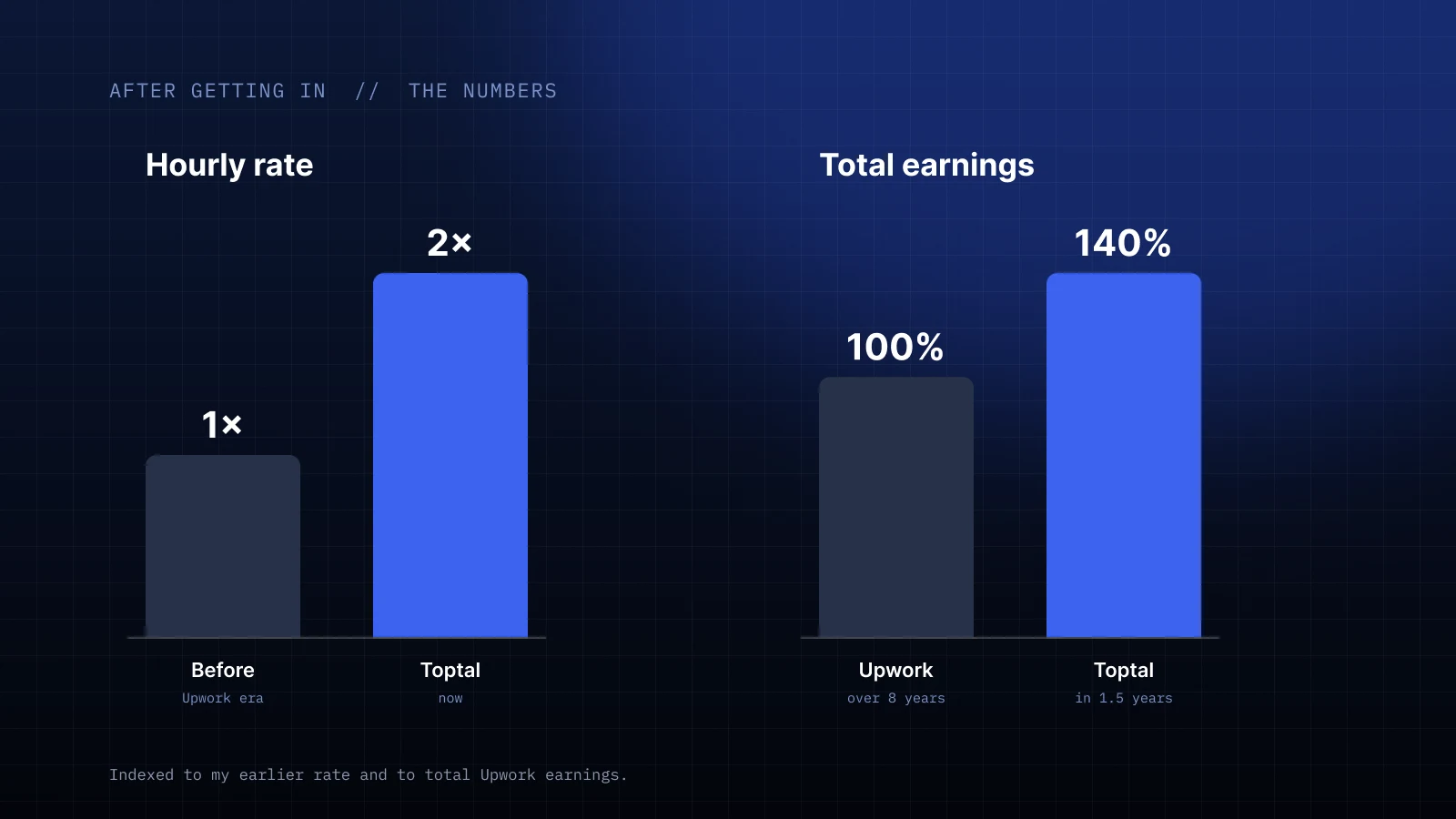
- My hourly rate doubled compared to what I charged before.
- In 1.5 years on Toptal, I earned 40% more than in 8 years on Upwork.
- The clients are different. They expect a senior designer, give clearer briefs and value the process, not just the pixels.
I’m still grateful for Upwork. It’s where I built my reputation, and I’m proud of my Top Rated status and 100% Job Success there. But Toptal opened a different level of work.
It’s still hard (and that’s fine)
I won’t lie: it’s not easy now either. Being accepted gets you in the room, but you still have to win every project. There are quiet months, and interviews that go nowhere. Clients compare you with other very good designers.
What got me through the screening is what keeps me going now. I don’t give up after a “no”, I look for the reason behind it, and I fix it.
What I’d tell anyone applying
- Treat a rejection as feedback. Mine pointed straight at my portfolio. Fixing it took years, but it worked.
- Show your process, not just the result. Screenshots aren’t enough; explain your decisions.
- Read the brief like a lawyer. My third attempt failed on a detail. Check every requirement twice.
- Experience compounds. Five years in a full-time role made me the designer who could pass.
- Apply again. I needed four tries. That’s fine.
Rejection isn’t a verdict
Sometimes it just means “not yet”.
It took me four applications and several years, and it was worth every one of them.
Working with me through Toptal, or directly? Either way works. If you’d like to hire me through Toptal, you can start here. You can see my UX/UI and web design work in the portfolio, or write to me at hello@vladimirkoncos.com.
First-time comments are reviewed before they appear. Your email is never published.